What Happens to Civic Life When Public Media Disappears?
By Lauren Maddox
A natural instinct right now is to look away. Turn down the news. Unplug.
I get it. War. Persecution. Social isolation. Soaring costs. Climate chaos. So much of what we watch, read, and listen to is designed to provoke and inflame — and the human nervous system was not built for a steady diet of that. Mine certainly isn't.
But looking away has a cost. And lately I've been spending a lot of time with people who are refusing to do it — people working toward solutions instead.
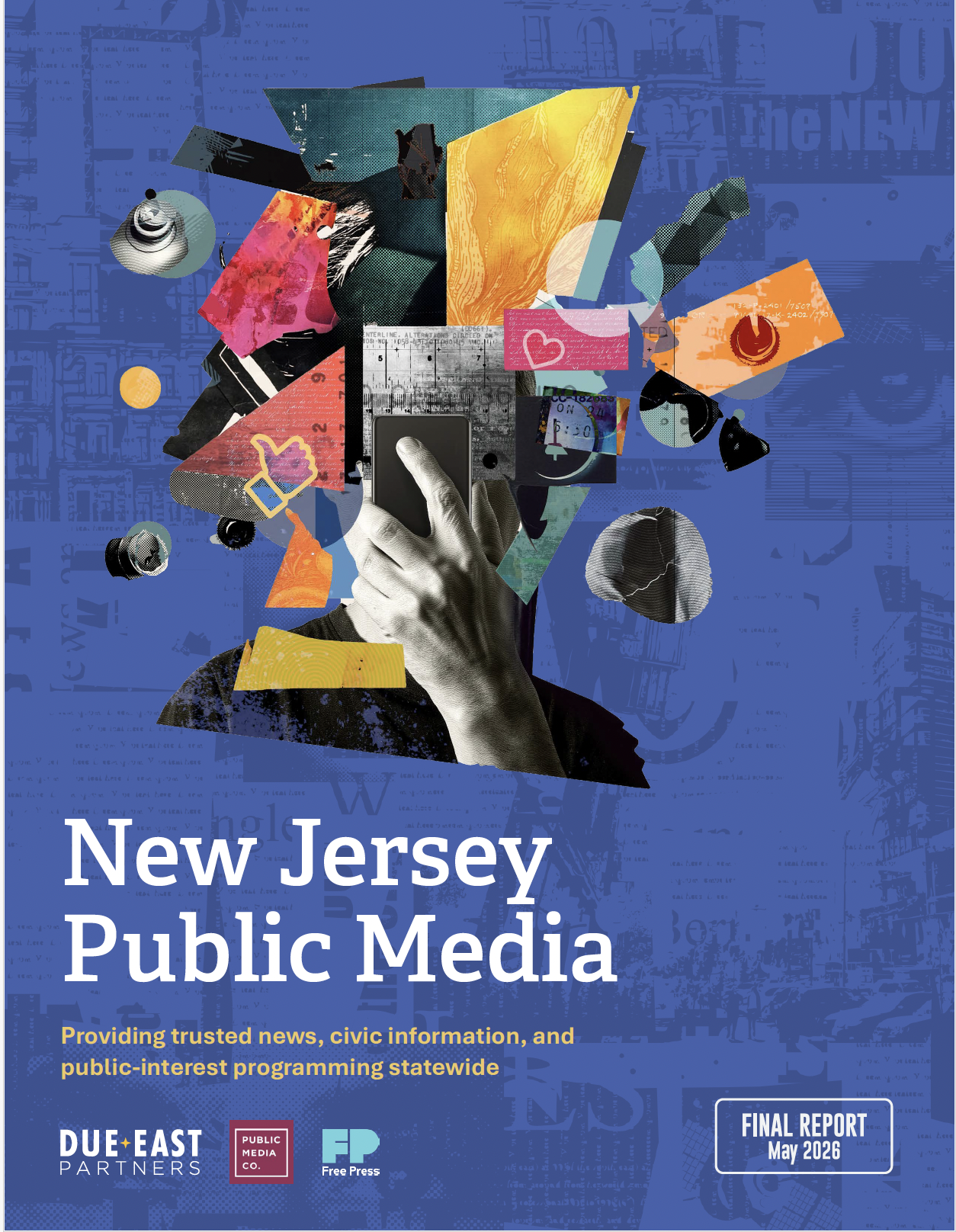
That's what drew me into the work behind the newly released Reimagining New Jersey Public Media report, commissioned by the New Jersey Civic Information Consortium and co-authored by Due East Partners, Public Media Company, and Free Press.
The question at the center of it: what happens to civic life when public media disappears?
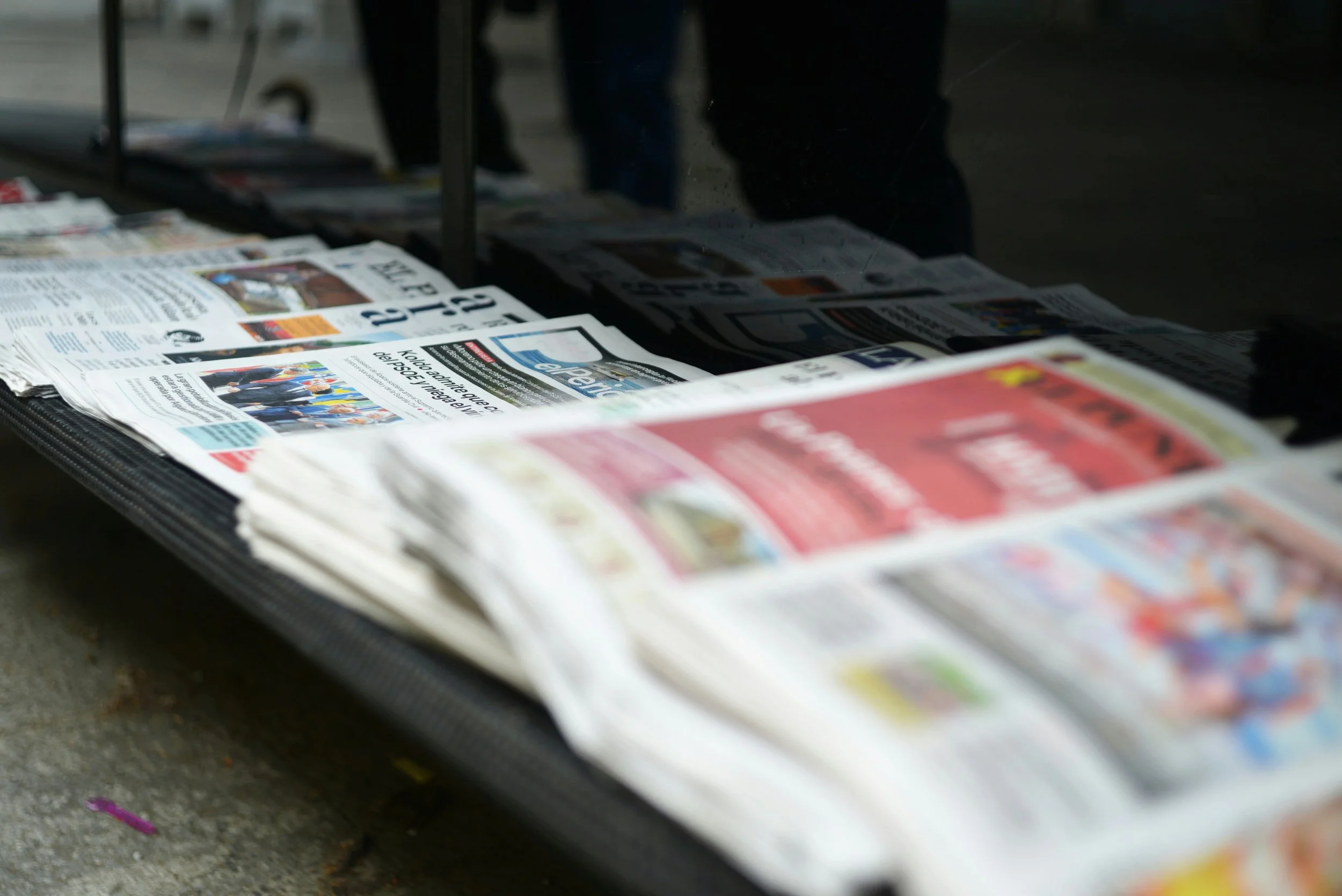
It's not a hypothetical. The Corporation for Public Broadcasting was eliminated after nearly 60 years of providing federal support for public broadcasting. Local news outlets across the country are dwindling. New Jersey ranks 49th in the nation in journalists per capita — roughly five journalists for every 100,000 residents. Only about 60% of New Jersey municipalities have a local news outlet producing regular reporting at all.
I grew up watching Mr. Rogers and Sesame Street. Later, Dick Cavett, when my dad decided it was time to "broaden our minds." I fully credit Schoolhouse Rock! with my ability to recite the Preamble to the Constitution — a pass/fail requirement of 9th grade Civics. Nearly 50 years later, every time I hear "we the people," that jingle comes back.
Public media was built to educate, not persuade. To de-escalate rather than divide. To connect people through stories that build understanding and empathy — especially when the news is bad. We need public media to sustain civic life. And it's quietly becoming a thing of the past.
"More than ever, we need trusted, fact-based information that aims to educate, not persuade — media that connects us as people through stories that build understanding and empathy, especially when the news is bad."
— Lauren Maddox, Due East Partners
The reimagined framework doesn't just diagnose the problem. It proposes a coordinated, statewide model — centralizing shared infrastructure while decentralizing storytelling through community correspondents, multilingual contributors, and local creators. Rather than treating residents as audiences, it positions communities as co-creators of civic information.
That last part matters to us at Due East because it's what we see in all our community impact work: the strongest systems are the ones built with people, not for them. Public media is no different. When communities lose trusted, locally-rooted information, they lose something that can't easily be replaced — a shared layer of civic life that holds everything else together.
New Jersey has a real opportunity here. With its existing infrastructure and growing philanthropic investment, it's positioned to pilot something the rest of the country is watching. If it works, it's a model other states can replicate.
We're grateful to the New Jersey Civic Information Consortium, Public Media Company, Free Press and the group of public media experts we worked with to create this blueprint. Now let’s get it built.