Strategic Planning Is Still a Human Sport
Every other month, another article declares that AI will automate strategy. The argument usually goes: machines can process more data, spot more patterns, and run more scenarios than any leadership team ever could. So why bother engaging your team in planning?
After three decades leading strategic planning processes, We've watched organizations try to shortcut that question — and pay for it. For a long time, the standard approach was a daylong or weekend retreat: brainstorm the plan, write it up, send it out. Rinse and repeat every 3 to 5 years. More often than not the result was a lengthy document that sat on a shelf. The plan existed (somewhere!) but no one used it. Even if leaders could locate their plan, they rarely used it to guide decisions.
When Due East was founded almost 12 years ago, we intentionally changed the process — not just to produce a strategic plan, but to spark the organizational shifts the plan envisioned. It worked. And it took months, sometimes over a year, to do it right.
Now clients are asking, how can we use AI to build a better plan? We’ll get to that in a minute, but first, here's what the “AI as Chief Strategist” misses. Strategic planning was never primarily an analytical exercise.

The Work That Machines Can't Do
Strategy is fundamentally about choice — and choices require judgment about what matters, not just what's measurable. When a leadership team sits down to plan, they're not just asking "what does the data say?" They're asking harder questions: What kind of organization do we want to be? What tradeoffs are we willing to make? What do we owe our people, our customers/clients, our community? These are questions of values and identity, and they don't have a right answer that an algorithm can surface.
Strategic planning is also inherently social and ideally, collaborative. The conversation is the work. When a team debates priorities, challenges assumptions, and arrives at a shared direction, something important happens beyond the output: the people in the room develop a shared mental model of the organization and its future. That shared understanding is what allows diverse teams to make thousands of aligned decisions in the months that follow — without needing to check in at every turn.
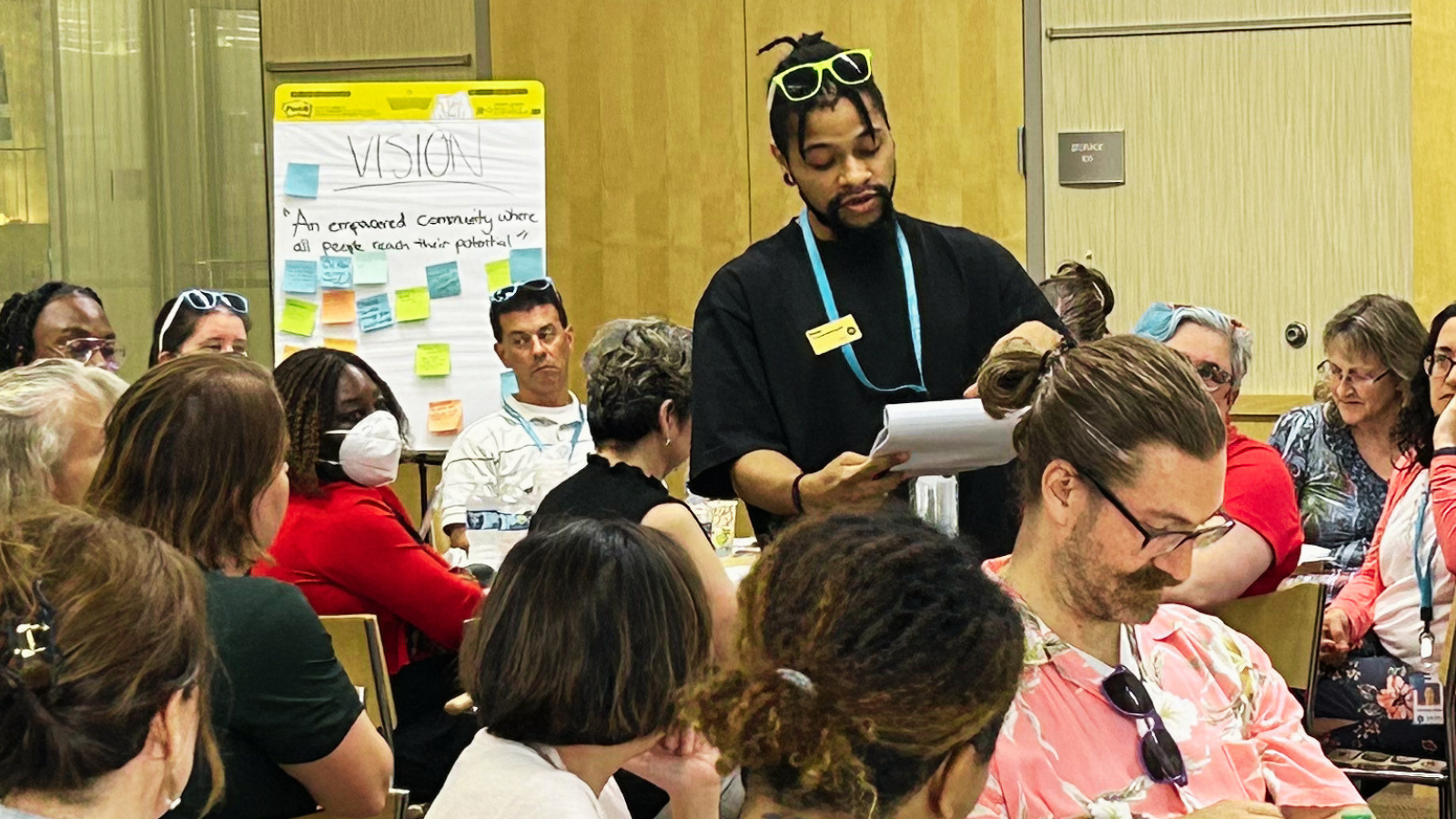
A planning session vision board takes shape. Strategy is a choice about who you want to be. (Photo: Due East Partners)
Where AI Earns Its Seat at the Table
None of this means AI doesn't belong in the room. Quite the opposite.
The parts of strategic planning that historically consumed enormous time — competitive analysis, market sizing, scenario modeling, synthesizing stakeholder feedback — are exactly where AI accelerates and sharpens the work. Benchmarking that once required weeks of preparation can now be compressed into days. Teams can stress-test more assumptions, explore more futures, and arrive at conversations better informed than ever before.
Used well, AI clears away the grunt work so that human judgment can operate at a higher level. Less time sorting through data. More time having the hard conversations that data alone can't resolve.
“Organizations that use AI to do their strategic thinking for them will get strategies that nobody owns.”
Co-Create to Co-Own
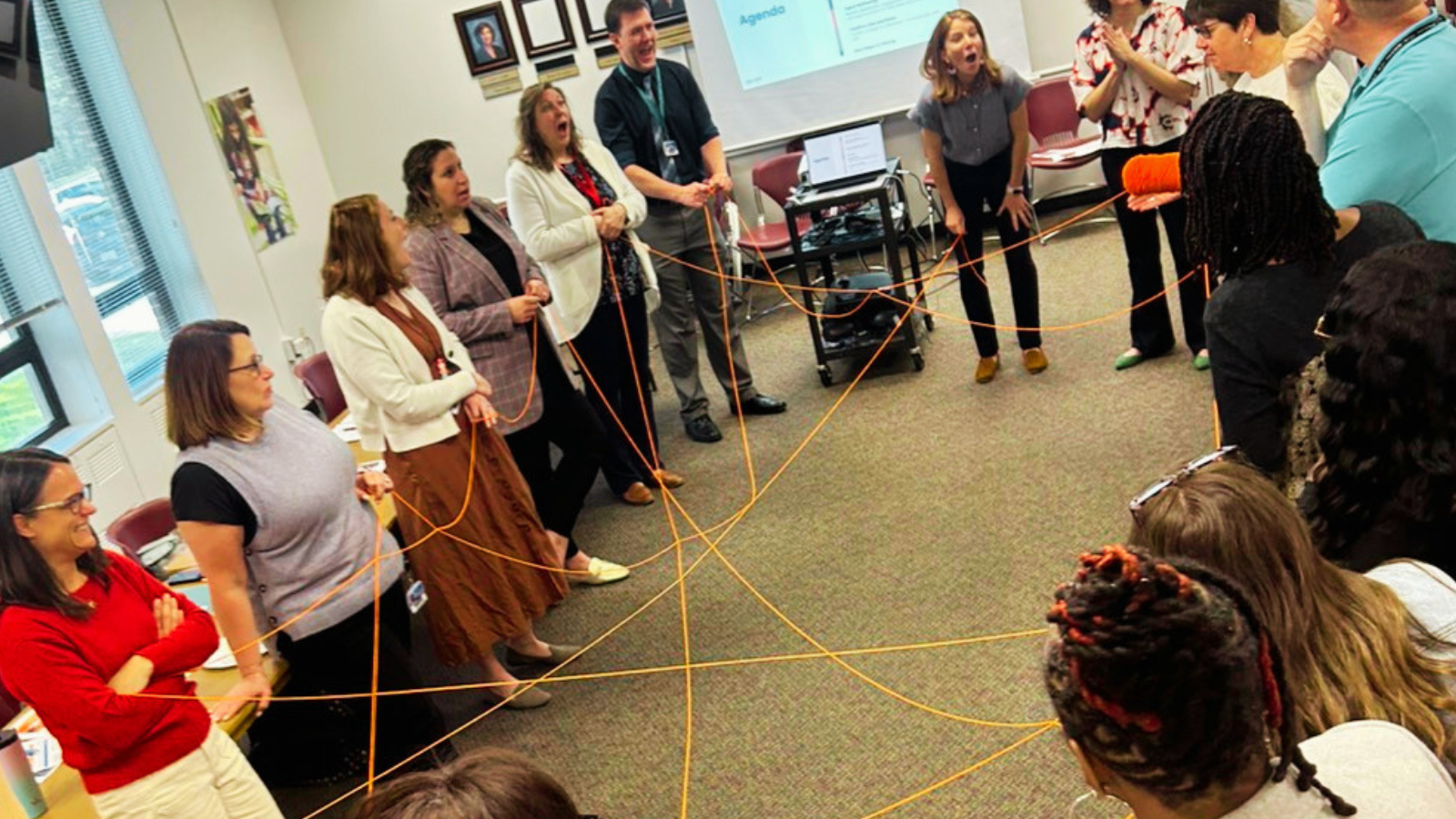
A strategic planning session in progress. The conversation is the work. (Photo: Due East Partners)
There's a principle that every effective change manager knows: people support what they help build. The same is true for strategy.
A plan handed down from a consultant — however sophisticated or accurate — rarely generates the organizational energy needed to execute it. But a strategy that a leadership team wrestled with, debated, and ultimately chose? That plan gets defended in budget meetings. It shapes hiring decisions at the margins. It survives the inevitable moment when circumstances change and someone has to decide what still holds.
For nonprofits and public agencies, this is key. Work funded by tax dollars or donations is held to a different kind of scrutiny, often requiring some level of consensus among an organization’s key constituents to be supported and sustained.
This is why AI can be a powerful partner in strategic planning without replacing the humans at the center of it. The analysis can be faster, the modeling more robust, the synthesis sharper. AI can compress weeks of preparation into days — but it cannot compress the dialogue, deliberation, and decision-making that ultimately get people rowing in the same direction toward a future they're committed to creating together. That part still takes time.
Organizations that use AI to do their strategic thinking for them will get strategies that nobody owns. Organizations that use AI to do their strategic preparation better will free their people to do what only people can do: decide who they are and where they're going.
That's a distinction worth planning around. This is the kind of planning Due East does — the human part, done well.